
Tokyo After Dark: Driving a Modified Nissan Silvia Through the Heart of JDM Culture
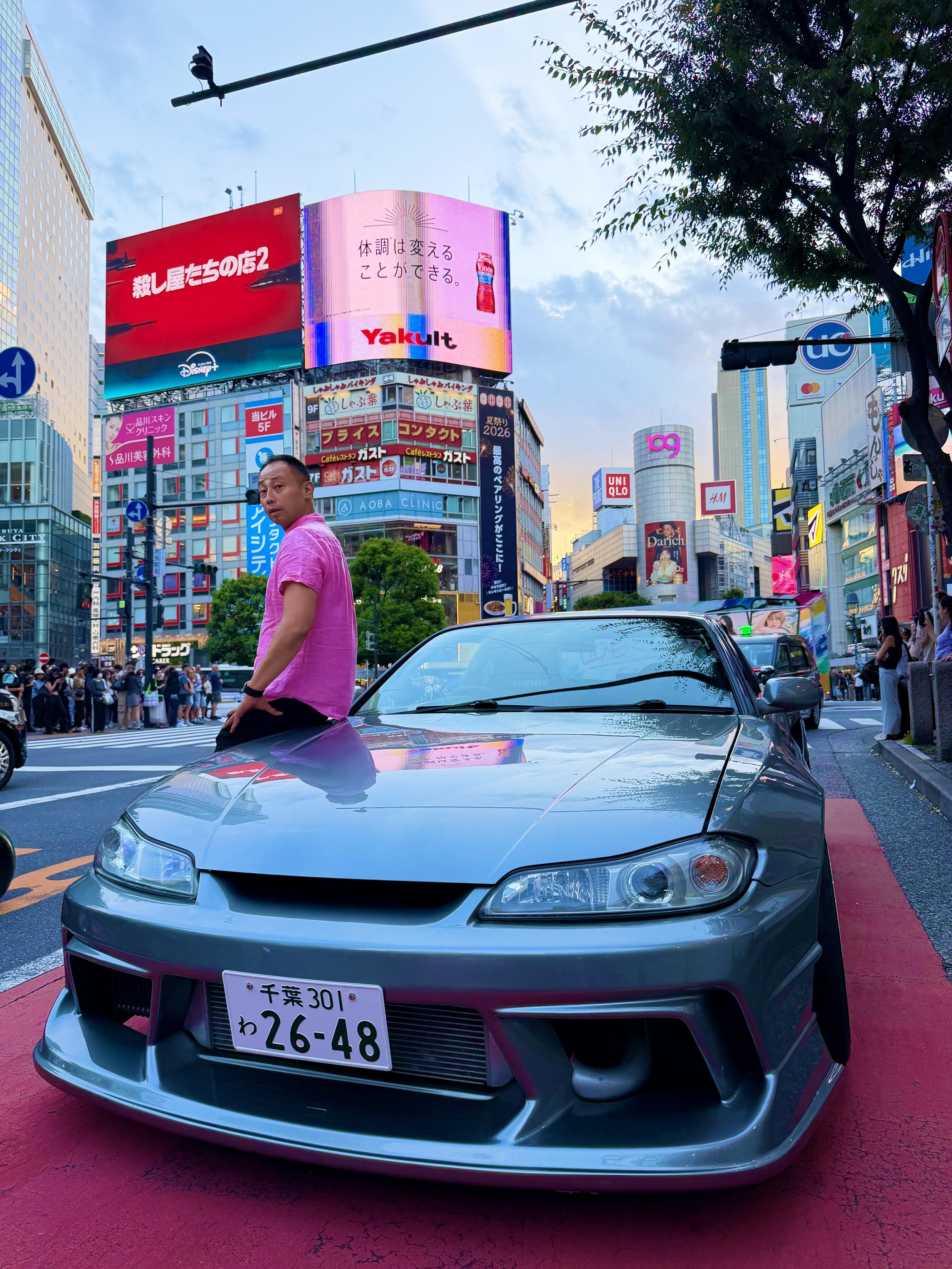
There are plenty of ways to see Tokyo. You can take the subway. You can sit in the back of a taxi. You can walk across Shibuya Crossing with a few thousand of your newest friends.
Or you can drive through Tokyo in a modified Nissan Silvia.
I chose the Silvia.
On this trip to Japan, I wanted to experience Japanese car culture from the driver's seat. Not from a museum and not from the passenger seat of a tour bus, but actually behind the wheel of one of the cars that helped define the JDM era.
And this wasn't a stock Silvia.
The car had been modified, which made the whole experience feel even more connected to Japan's tuning culture. It sat low, felt raw and mechanical, and had that wonderful slightly unpredictable personality that older modified Japanese cars seem to have.
For someone who spends a lot of time around Ferraris, Lamborghinis and Aston Martins, there's something refreshing about a car like the Silvia.
It doesn't need 700 horsepower to be interesting.
It has personality.
The Turbo Has Something to Say
One of my favorite parts of driving the Silvia was experiencing the turbocharged engine.
Modern performance cars have become incredibly sophisticated. Power delivery is often so smooth and immediate that you barely notice all the engineering working underneath you.
The Silvia was different.
As I climbed through the rev range, there was this brief moment of anticipation around 5,500 RPM. You could hear the turbo coming alive, followed by a tiny delay before the power really arrived.
And then, kick.
The car suddenly pushed back at you.
That little pause followed by the surge is part of what makes an older turbocharged JDM car so entertaining. You actually feel the engine building toward something. There's a conversation happening between your right foot, the turbo, and the rear wheels.
It's not perfectly linear.
That's exactly why it's fun.
Driving Through Shibuya Crossing
One of the most surreal moments was actually driving through Shibuya Crossing.
Most people experience Shibuya standing on a street corner waiting for the pedestrian lights to change. Then suddenly the intersection empties of cars and a wave of people pours across from every direction.
This time, I was seeing it from behind the wheel of a modified Nissan Silvia.
There I was, sitting on the right side of the car, surrounded by giant video screens, illuminated signs, taxis, buses and crowds waiting at the edges of the intersection.
Then the light turned green and we drove straight through the middle of it.
That made the experience especially memorable because Shibuya Crossing is more than just a busy intersection. It has become one of the defining images of modern Tokyo, representing the scale, energy and strangely beautiful organization of the city.
You can have hundreds, sometimes thousands, of people moving through the intersection from every direction, yet somehow it all works. Then, almost instantly, the pedestrians disappear, traffic begins moving again, and the whole process resets.
There's something very Tokyo about it.
Order inside chaos.
Shibuya is also surrounded by fashion, music, nightlife, advertising and youth culture, which has helped make the neighborhood an international symbol of contemporary Japan.
I've seen the crossing countless times in movies, photographs and travel videos.
But driving a modified Silvia through it added another layer.
Here was one icon of Japanese culture meeting another: Tokyo's most famous intersection and one of Japan's most recognizable enthusiast cars.
That's a pretty great Tokyo memory.
Tokyo Tower: An Icon of Postwar Japan
Another memorable part of the drive was passing Tokyo Tower.
Tokyo Tower has always fascinated me because it represents a very different chapter of Tokyo's story.
Built in the late 1950s, the red-and-white communications tower became a symbol of Japan's postwar rebirth and modernization. For decades, it was one of the most recognizable landmarks in the Tokyo skyline.
Yes, Tokyo has newer and taller buildings today.
But Tokyo Tower still has soul.
It's appeared in countless Japanese movies, television shows, anime and photographs. For generations of people, seeing that orange-red structure glowing above the city meant one thing:
Tokyo.
And there was something incredibly cinematic about seeing it through the windshield of the Silvia.
A classic Japanese performance car underneath one of Tokyo's classic landmarks.
The newer Tokyo skyline is spectacular, but Tokyo Tower carries history with it.
Onto the Wangan
The really fun part begins when Tokyo opens up.
Once you get onto the Wangan Bayshore Route, the city changes.
The roads stretch along Tokyo Bay, elevated expressways twist through the skyline, and suddenly you're surrounded by the exact scenery you've seen for years in Japanese car videos, racing games and tuner culture.
Driving the Wangan in a modified Silvia feels almost surreal.
Tokyo is glowing around you, the concrete barriers are rushing past the windows, and you're sitting inside one of the cars that helped create the mythology.
And every time I wound the Silvia up through the gears, there was that same little moment.
Rev.
Wait.
Turbo.
Kick.
It makes you understand why people become obsessed with these cars.
And no, I wasn't attempting to recreate Tokyo Drift.
I've reached the age where keeping the security deposit has become surprisingly important to me.
Daikoku PA: Where the Cars Become the Attraction
Then there is Daikoku Parking Area.
Calling Daikoku a highway rest area doesn't really explain it.
Depending on the night, it can turn into one of the greatest spontaneous car shows you'll ever see. Skylines, Supras, RX-7s, Silvias, Porsches, Lamborghinis, kei cars and heavily modified machines can all end up parked next to each other.
That's part of what makes it so much fun.
You never really know what is going to show up.
But what I loved most wasn't any individual car.
It was the culture around them.
People wander around looking at each other's cars, talking, taking photographs and appreciating builds that range from completely ordinary to absolutely wild.
There is very little pretension.
A guy with an immaculate Nissan might spend ten minutes photographing somebody else's Toyota. Someone arrives in a tiny kei car and gets just as much enthusiasm as the person arriving in something exotic.
The car isn't necessarily a status symbol.
It's a canvas.
Seeing Tokyo Through Cars
That may have been my favorite lesson from driving in Japan.
Japanese car culture isn't only about owning the most expensive machine. It's about what you do with it. Wheels. Suspension. Paint. Exhaust. Interior. Photography. Where you drive it. Who you meet because of it.
The car becomes part transportation, part creative expression and part social passport.
And driving a modified Silvia through Tokyo made me appreciate JDM cars in a completely different way.
I've driven plenty of exotic cars around the world, but the environment matters just as much as the badge on the hood.
Driving a Ferrari through Tuscany makes sense.
Driving a Porsche through the German countryside makes sense.
And driving a turbocharged Nissan Silvia through Shibuya Crossing, underneath the glow of Tokyo Tower, out onto the Wangan and into the nighttime car scene at Daikoku?
That makes perfect sense too.
Sometimes the best automotive experiences aren't about going the fastest.
They're about driving the right car in the right place.
And Tokyo in a modified Nissan Silvia is pretty hard to beat.